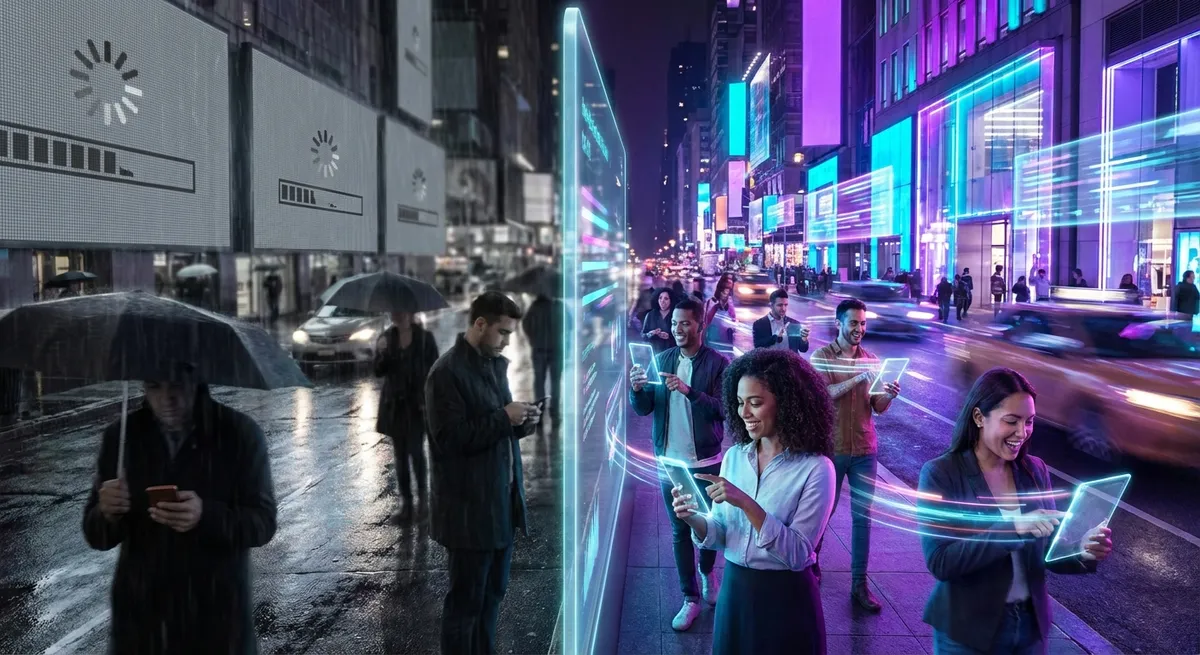
The modern internet has zero chill. When someone hits your site, they’re not browsing — they’re judging. In seconds. Your design, your brand, your credibility, your vibe — all filtered through one brutal metric: how fast your site loads. If your pages hesitate, your visitors bounce, your conversions dip, and your brand feels dated, even if your content is fire.
Website speed isn’t just a tech stat anymore. It’s part of your identity. Let’s talk about the speed moves that are trending right now — the kind of upgrades you’ll want to screenshot, share, and send to every founder, creator, and dev in your circle.
Why Website Speed Is the New Brand Flex
Speed is no longer a backend nerd topic. It’s a front-row, main-character brand feature. When your site loads instantly, people subconsciously tag you as:
- More trustworthy
- More professional
- More “this brand gets it”
Search engines notice too. Google uses page experience signals (including Core Web Vitals) to help decide who gets seen and who gets buried. Faster sites generally rank better, convert better, and retain users longer.
But here’s the real twist: users don’t just compare you to your competitors anymore. They compare you to every fast experience they’ve ever had — Instagram, TikTok, YouTube, Amazon. If those apps feel snappy and your site feels sluggish, you’re instantly labeled as “behind.”
Speed is now part UX, part SEO, part marketing, and part social proof. You can’t outsource it to “the tech team” and forget about it. It’s a whole‑brand decision.
Trending Point #1: “First Touch” Speed Matters More Than Total Load
Your site doesn’t need to fully load every last pixel in half a second — it needs to feel responsive in half a second. That “first touch” moment is everything.
Users care about things like:
- How fast something appears on screen (Largest Contentful Paint)
- How quickly they can tap or click without lag (Interaction to Next Paint)
- Whether the layout jumps around while loading (Cumulative Layout Shift)
If key content appears quickly, people stay. If they tap a button and nothing happens for a beat, they mentally log your site as “slow,” even if the total load time isn’t terrible.
The trend: smart sites are prioritizing perceived speed. That means:
- Loading critical content first (above-the-fold images, headlines, CTAs)
- Deferring non-essential scripts until after interaction
- Making buttons and links instantly responsive, even while other assets are still loading
When your site feels instant, users forgive a lot behind the scenes — and your brand earns bonus points for “smooth” and “modern.”
Trending Point #2: Mobile Is the Real Speed Battlefield
Your site might be fast on your fiber-backed laptop, but that’s not where the internet lives anymore. The real performance test is: does your site feel fast on a mediocre mobile connection?
Most traffic is mobile. Many users are on shared Wi‑Fi, spotty 4G, or crowded networks. That’s where slow scripts and heavy design choices get exposed hard.
What’s trending now:
- Mobile-first performance: Designing and optimizing for the slowest realistic scenario, then scaling up — not the other way around.
- Lighter hero sections: Less autoplay video, more optimized images and bold typography that loads in a flash.
- Tap-first UX: Big, fast-loading buttons and clean navigation so mobile users don’t waste time hunting.
If your site only feels good on a high-end desktop, it’s not “fast” — it’s privileged. The brands winning in 2025 are obsessed with how their site performs on the bus, in the elevator, or at the airport gate.
Trending Point #3: Speed as a Trust Signal (Your Users Can Feel It)
Nobody reads your SSL certificate. They feel your trustworthiness through their experience. And speed is at the top of that list.
Here’s how fast sites quietly scream “you can trust us”:
- E‑commerce: Quick page transitions and instant cart updates signal that your checkout is reliable and secure. Laggy carts and slow payment pages feel sketchy, even if they’re technically safe.
- SaaS & tools: Fast dashboards and snappy onboarding give people confidence your product won’t waste their time.
- Blogs & content sites: Pages that pop open instantly make your content feel more authoritative before the reader even scrolls.
People have been burned by scammy, malware-riddled sites for years — and a lot of those have something in common: bloated, janky loading experiences. Your speed is a subtle way of saying, “We’re legit. We’ve invested in doing this right.”
If your pages lag, your visitors don’t just get bored — they get suspicious.
Trending Point #4: Visual Minimalism Is Back… Because It’s Faster
The internet went through a maximalist phase: huge hero videos, heavy animations, parallax everything. It looked impressive — and loaded like a 90s download bar.
Now the trend is shifting to speed-first minimalism:
- Clean layouts with fewer, sharper visual elements
- Text that’s actually readable without 10 scripts and custom font hacks
- Purposeful animation instead of “let’s animate all the things”
This isn’t about being boring. It’s about making everything on the page earn its weight. If an element doesn’t improve the user’s decision-making or emotion, it’s a candidate for the chopping block.
The bonus: fast, minimal designs often look more premium. Think Apple-style clarity vs. clutter. When your site feels intentional, users assume your product or service is too.
Trending Point #5: Speed Stories Are Becoming Shareable Wins
Speed used to be an internal metric: “We shaved 500ms off TTFB.” Cool for devs, invisible to everyone else. That’s changing. Brands are now turning speed improvements into shareable stories.
Things people actually post about:
- “We doubled conversions after optimizing our homepage speed.”
- “We cut our bounce rate in half after cleaning up third-party scripts.”
- “Our mobile site went from frustrating to fun after we focused on performance.”
Why this works:
- It’s relatable. Everybody hates slow sites.
- It’s quantifiable. Before-and-after screenshots, graphs, and stats play great on LinkedIn, X, and case study pages.
- It signals competence. You’re not just hustling — you’re optimizing.
If you’re a founder, marketer, or creator, “We made our site insanely fast” is now a flex. Share your performance glow-ups. Show your load time charts. Brag about your Core Web Vitals. It’s the kind of behind-the-scenes win people actually like to see.
Conclusion
Website speed isn’t background tech — it’s front-stage brand energy. Your load time is part first impression, part sales pitch, part trust badge, and part growth engine.
If your site feels instant, responsive, and effortless, people stick around, click deeper, and convert faster. If it drags, they don’t just leave — they mentally file you under “outdated” and move on.
Treat speed like a product feature. Design for it. Measure it. Talk about it. Turn your performance upgrades into stories your audience can see, feel, and share.
In the era of instant gratification, fast isn’t a luxury. It’s the baseline for being taken seriously online.
Sources
- Google Search Central – Page Experience and Core Web Vitals – Explains how speed and Core Web Vitals influence search visibility and user experience.
- Google – Web Vitals Overview – Breaks down metrics like LCP, INP, and CLS that define modern website performance.
- Akamai – The State of Online Retail Performance – Analyzes how page load time impacts bounce rate, conversions, and revenue.
- Nielsen Norman Group – Response Times: The 3 Important Limits – Classic UX research on how users perceive delays and responsiveness.
- HTTP Archive – Web Almanac: Performance Chapter – Data-backed insights into how real-world sites are performing and where they’re slowing down.
Key Takeaway
The most important thing to remember from this article is that this information can change how you think about Website Speed.