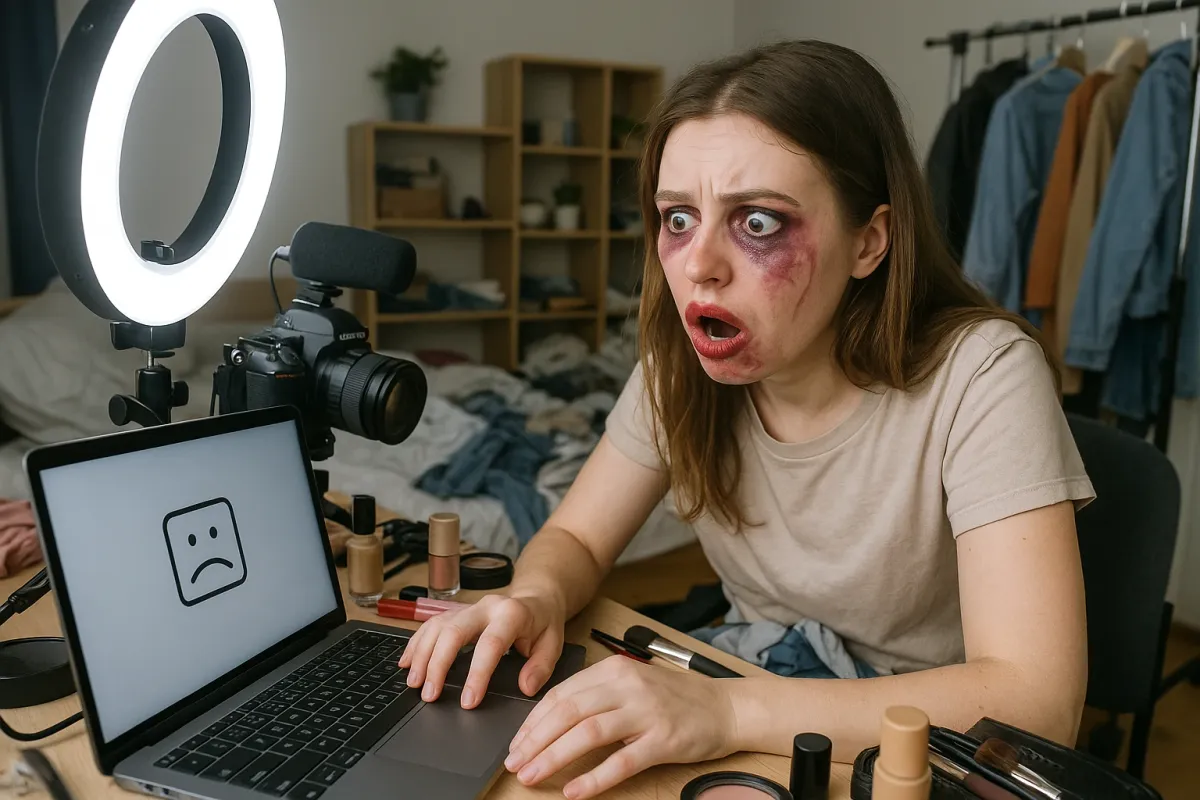
If you’ve ever doom‑scrolled through catastrophic makeup fails, you know one brutal truth: the internet has ZERO chill. The subreddit r/BadMakeUpArtists (featured today on BoredPanda) is blowing up again, dragging “Instagram vs Reality” looks that went horribly wrong. And while everyone’s clowning on bad contour, there’s another kind of glow‑up (or glow‑DOWN) happening behind the scenes: your hosting.
Because here’s the twist — your website can be that makeup fail.
The wrong host is cakey foundation: it looks okay in the bathroom mirror… then gets absolutely annihilated under real‑world lighting (aka real traffic, real users, real stakes). So let’s use the r/BadMakeUpArtists chaos as a live case study for choosing a host that doesn’t turn your brand into a meme.
Below are 5 viral‑ready hosting review angles inspired by today’s trending makeup disasters — the stuff website owners will actually want to share (and maybe subtweet their current host with).
1. “Instagram vs Reality” Hosts: Stop Falling for the Airbrushed Landing Page
The r/BadMakeUpArtists posts going viral today all share the same energy: the client got an “Insta glam” promise and walked out looking like a discounted Halloween filter.
Hosting is doing the same catfish routine.
So many providers slap “UNLIMITED EVERYTHING” and “99.99% Uptime” across a polished homepage, but crack open real user reviews on Reddit, Trustpilot, or Twitter/X and you’ll see the smudged liner: throttled CPU, surprise suspensions, 30+ minutes to answer a live chat, or servers crawling when traffic spikes.
What to look for in real‑world hosting reviews:
- Screenshots of uptime from tools like UptimeRobot or Better Uptime
- Independent speed tests (not just the host’s own “benchmarks”)
- Long‑term customers (2+ years) sharing both good and bad experiences
- Mentions of consistency — not “it’s fast… except on Mondays and launches”
If a host looks like an Instagram filter but reviews scream “foundation sliding off by noon,” believe the unfiltered pics, not the promo shots.
2. Patchy Coverage, Patchy Makeup: How Data Centers Shape Your “Blend”
In today’s BoredPanda feature, some of the worst makeup fails are all about blending: harsh lines, patchy coverage, weird color transitions. It’s the same vibe when your host has badly planned infrastructure.
Your “blend” on the web is how smoothly your site loads for people in different places. If your host only has a single overworked US data center and your audience is global, visitors in Europe or Asia are basically seeing your site through a foggy mirror.
When reading hosting reviews, watch for:
- Users in different countries reporting very different load times
- Complaints about latency for international traffic
- Positive shoutouts to specific regions (e.g., “Their EU data center is 🔥”)
- Mentions of built‑in CDN or easy Cloudflare integration
A solid host should have smart geographic coverage and a CDN story that makes sense in 2025, not “we host everything in one mystery building and pray.”
If blending matters for your face, it definitely matters for your brand.
3. “Overdone, Under‑Skilled”: When Fancy Features Hide a Messy Core
Some of the r/BadMakeUpArtists photos trending right now are wild: glitter everywhere, neon cut creases, lashes that could take flight — all piled on top of blotchy, uneven foundation. That’s exactly how some hosts operate.
They drown you in features: AI site builders, “1‑click ads optimization,” “SEO autopilot,” unlimited sub‑everything… but skip the basics like stable PHP versions, sane resource limits, or a clean control panel.
Review red flags that scream “clown contour host”:
- Users constantly hitting vague “resource limits” with small sites
- Confusing dashboards with 20+ add‑ons but no clear performance tools
- Frequent complaints about outdated PHP, Node, or database versions
- People saying they had to move hosts just to get a stable WooCommerce store
The best hosts feel like a clean, well‑blended base with subtle highlight: fast servers, simple management, modern stack — then extra features on top. If reviews sound like “they do everything, but nothing well,” walk away. That’s glitter on bad concealer.
4. Client Support or “Bad MUA Energy”? How Your Host Handles a Meltdown
In the BoredPanda article, you can practically feel the rage of people who paid real money for disaster makeup. What really sticks isn’t just the bad look — it’s how the artist reacted. Blamed the lighting? The client’s skin? The camera? Yikes.
Hosting support plays the same make‑or‑break role.
When something goes wrong — a plugin conflict, a 500 error, a sudden traffic spike — your host can either be the calm pro who fixes it, or the chaotic artist who shrugs and says “must be your browser.”
Support patterns to hunt for in reviews:
- “They owned the issue and fixed it for me” vs. “They kept blaming my theme”
- Real response times: “chat answered in 2 minutes at 2 AM” vs “ticket replied in 3 days”
- Technical depth: did support actually troubleshoot, or just paste canned scripts?
- How they handle non‑expert users: patient explanations or condescending replies?
Scroll through Reddit threads, Twitter rants, and niche FB groups for your CMS (WordPress, Shopify alternatives, Ghost, etc.). Screenshots of brutal support transcripts are the hosting world’s version of “look what this MUA did to me” — and they’re gold for your decision.
5. Long‑Wear or Melt‑Down? Why You Need “12‑Hour Foundation” Energy in a Host
A huge theme in today’s makeup fail thread is durability. Some looks might’ve started decent but melted off in a hot car ride, a club, or under stage lights. On the web, that “heat” is traffic, campaigns, and launch days.
Your host needs long‑wear performance — not just “looks fast when nobody’s on it.”
In real‑world hosting reviews, search for:
- Stories about Black Friday, viral TikTok moments, or product launches
- Users specifically mentioning how the host handled traffic spikes
- Comments like “we outgrew shared hosting and upgrading was seamless”
- Transparency around resource scaling — clear CPU/RAM allocations, burst handling
You want a host that behaves like legit long‑wear foundation: consistent under stress, sets properly, doesn’t crack when life (or traffic) gets loud. If reviews mention frequent throttling, random downtime during busy hours, or “they told me to upgrade immediately” every time traffic bumps a little… that’s not long‑wear, that’s running mascara.
Conclusion
Today’s r/BadMakeUpArtists feature is fun to laugh at — until you realize your website might be having the exact same experience in hosting form: over‑promised, under‑blended, melting under pressure, and supported by someone who just blames your “skin type.”
Here’s your Host Qio checklist before you stick with (or switch to) a provider:
- Compare the glossy homepage claims with raw user reviews
- Check how global performance “blends” across locations
- Make sure core performance isn’t hiding under glittery features
- Read real support horror stories and happy endings
- Look for long‑wear hosting that stays strong during traffic heat
Because on the internet, you don’t want your brand going viral as a hosting fail meme.
Share this with that friend whose site “just goes down sometimes” like it’s normal — the same way you’d send them a makeup fail and say: “PLEASE don’t let this be you.”
Key Takeaway
The most important thing to remember from this article is that this information can change how you think about Hosting Reviews.